GST on Gym Membership in India: What Owners Need to Know
Understanding Goods and Services Tax (GST) rules, applicable tax rates, registration turnover thresholds, and how to maintain clean payment records for your Chartered Accountant.

1. What is the GST Rate on Gym Memberships?
In the Indian GST tariff structure, physical fitness centers, gymnasiums, and health clubs are classified as services under SAC Code 999723 (Services provided by gyms and fitness centers).
For example, if your gym charges a membership base price of ₹2,000 per month and is registered under regular GST, the total fee charged to the member will be ₹2,360 (₹2,000 + ₹180 CGST + ₹180 SGST).
2. When is GST Registration Mandatory for a Gym?
Not every gym in India needs to register for GST on day one. Under current Indian tax provisions, service providers have clear turnover exemptions:
Exempt From GST
If your gym's total annual gross revenue across all branches is under ₹20 Lakhs (or ₹10 Lakhs in Special Category North-Eastern states), you are not required to take GST registration. You do not charge GST to members.
Mandatory GST Registration
Once your total receipts cross ₹20 Lakhs within a single financial year, you must apply for a GST Identification Number (GSTIN) within 30 days and collect 18% GST on fees.
3. Understanding Input Tax Credit (ITC) for Gym Owners
While collecting 18% GST increases your nominal price, registered gym owners can claim Input Tax Credit (ITC) on valid business purchases, significantly lowering their net tax outgo:
- Gym Equipment Purchases: Treadmills, squat racks, plates, and cable machines carry 18% or 28% GST. With a valid GST invoice, that entire tax amount offsets your membership tax liability.
- Commercial Rent: Commercial leasing agreements charge 18% GST. You can claim credit on this monthly rental tax.
- Air Conditioning & Electrical Infrastructure: Taxes paid on commercial AC maintenance, lighting, and sound systems can be credited against output tax.
4. Key Compliance Deadlines Every Owner Must Track
If your gym is registered under the regular GST scheme, your accountant will require monthly or quarterly data to file:
| Return Type | Filing Frequency | What It Reports |
|---|---|---|
| GSTR-1 | Monthly / Quarterly (QRMP) | Details of outward membership collections and sales |
| GSTR-3B | Monthly (20th of next month) | Summary return of tax liability after deducting eligible ITC |
| GSTR-9 | Annual (By Dec 31st) | Consolidated annual return for the financial year |
How FitOS Helps You Prepare for Your CA
Please note: FitOS is a gym operations platform, not a GST invoicing software. FitOS does not generate tax invoices with automated CGST/SGST breakdowns or file government tax returns.
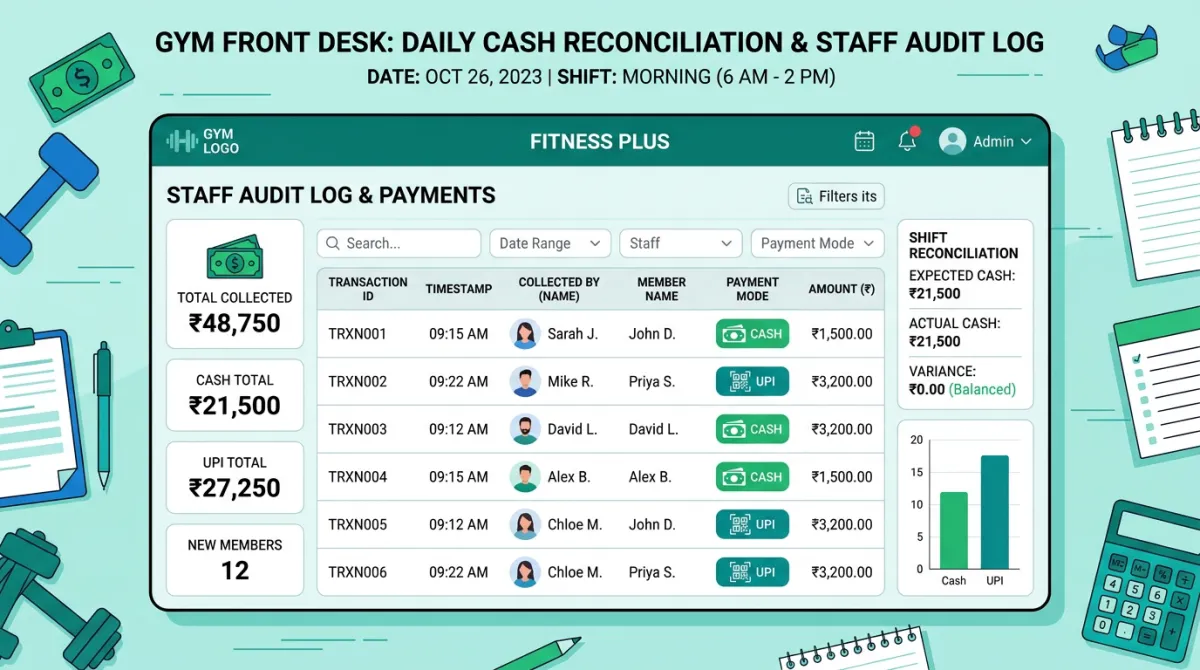
Instead, FitOS solves the biggest pain point gym owners have during tax season: disorganized payment records.
Accurate Date-Wise Collection Reports
Export exact payment logs showing member names, payment dates, plan types, and amounts collected.
Clear Cash vs. UPI Breakdown
Chartered Accountants need separate totals for bank settlements and physical cash. FitOS tags every entry cleanly.
Multi-Branch Segregation
If you manage multiple gym branches under one business entity, generate branch-wise or consolidated figures in seconds.
Keep Clean Financial Records for Your Gym
Record every fee payment, track member dues, and download structured monthly collection reports for your accountant—100% free with FitOS.
JaiPar FitOS Editorial Team
Business, tax, and operational guides for Indian gym owners.